About Us
Pun Pun is a small organic and regenerative farm, seed saving center, and sustainable living and learning center in Chiang Mai, Thailand.
How We Got Started
In 2003, when we came to this land we had a few visions in mind. Jo was raised a farmer and after living in Bangkok for a short time, went back to farming at his homeland in Northeastern Thailand. After that he was helping work with the earthen building movement in Thailand, and traveling a lot. What he really wanted to do was get to a place where he could grow the varieties he was interested in, start saving seeds and work with local people to do the same.
Having worked with other farmers through groups and networks in Thailand on organic agriculture and supporting transitions to organic, we knew the only way to create a movement was to create a model in which farmers can see how it can be done. Talking alone with farmers when you’re not doing it yourself does nothing. You could talk and explain your theories and ideas for ages but this lends you little credibility unless you can show people what you have done yourself and found to work. Once a model is in place all a farmer needs to do is to see it once and they are able to understand how it works and to make changes on their land as they convert towards organic farming.
As well as being a model we wanted to also include an active learning center where we could host workshops, internships, and trainings on sustainable living for both Thai and international people.
There are times when we are more focused on the land and we are growing a large percentage of our food. There are other times when a large percentage of our gardens are going to seed. And there are times when the gardens get smaller because we’re hosting a lot of trainings and have few people to take care of it all. But we try to maintain a balance that works for the people living here while continuing to do outreach.
We’ve faced a few obstacles in our work. First off was the integrity of the soil on the land. The history of our land was that it was forested, was then cut down and mono-cropped with corn. This degraded and eroded the soil so much that in a few years time the soil became infertile and was deserted. The old owner then plowed and burned it consecutively to just keep it clear with the hopes of selling it to some unknowing outsider. That’s where we came in! Haha! But truly it was much worse than we actually thought it was when we got it! When we came we had hard, degraded soil buried under weeds up to your knees or waist. We weren’t able to walk through the whole of the land because of prickly overgrowth. There were no trees besides the small mango starters on the far side of the hill. Everything had to be done by hand and with little resources, as we had no money to invest and few people to work the land. We also had to still pass on much of our past work to new trainers and had to leave the farm often to transfer that work.
At first things were very hard to grow. It seemed like a death wish to put anything in the soil. But we gradually built up the soil and moved our way up the hill developing as much as we could at a time. We planted banana trees in contour lines along the hillside in order to build up organic matter, to retain water in the soil and to prevent further erosion. We planted fruit and other herbal edibles in between the banana trees. We developed the garden beds with manure, compost and mulch. We also had to build all the structures we needed to support community living needs and a place to host programs. This was all done by hand using all available resources possible. We stayed in a little hut on the neighbor’s land and worked from morning to night and delighted in the changes happening everyday.
Another aspect we were dedicated to work on was to change people’s view of money. Although money can be a tool, we feel it should not be our inspiration or dependency. We feel that true security comes from the ability to grow your own food, build your own home, and provide for your own needs. These are the skills our modern world has alienated or separated us from, and that wisdom is being lost quickly. We began the project with no money. Some friends donated a bit and we borrowed a bit to buy the land and we began working on the project with no funding. We wanted to live and work on the land in order to develop it. This is not to say we don’t use money, it’s just not our driving force.
We believe that whatever we demonstrate should be able to be done by anyone, regardless of their previous knowledge, skills or abilities. For this purpose having degraded soil and no funds was perfect. If we could transform the land with what we had, anyone could do the same. Because of this belief, we focus on simple living and simple low-technology alternatives that individuals are able to manage and understand easily.
What We Do
Pun Pun is a small organic farm, seed saving center, and sustainable living and learning center. We strive to find more ways to live a more self reliant lifestyle by growing organic food, building our own natural homes, and experimenting with low tech appropriate technologies. We seek to bring back the tradition of seed saving amongst farmers and growers by collecting, propagating, and exchanging indigenous and rare varieties. We seek to live simply and continue to learn.
Seed Saving
We feel like bringing seed saving back into the hands of farmers and growers can empower people as well as increase the quality of seed and varieties we have to consume. As a seed center we collect rare and indigenous seeds from Thailand and all around the world. We propagate the seeds, grow the plants and then collect the seeds once again. These seeds are shared through a network of organic farmers and communities. We are a living seed bank, meaning we do not only collect seeds to keep, but grow and exchange the seeds continually to bring the species/variety back into daily use. We process and package our seeds on the farm, and we distribute them for free. Our aim is that others will grow the plants, save seeds and share their seeds and so on and so on. With more people creating their own food security.
Natural Building
We believe the knowledge and ability to build your own home can be an empowering tool in creating sustainable communities and increasing access to affordable, comfortable, and accessible housing. Natural building techniques are ancient and time tested and have housed much of the population of the world. We use these traditional techniques in combination with modern materials and innovations to make them a practical alternative to the resource intensive building practices used conventionally. We at Pun Pun focus on building primarily with adobe, straw, clay, and bamboo. We demonstrate the simplicity of understanding the materials in order to use them for whatever purpose most appropriately fits your situation.
Organic Gardening
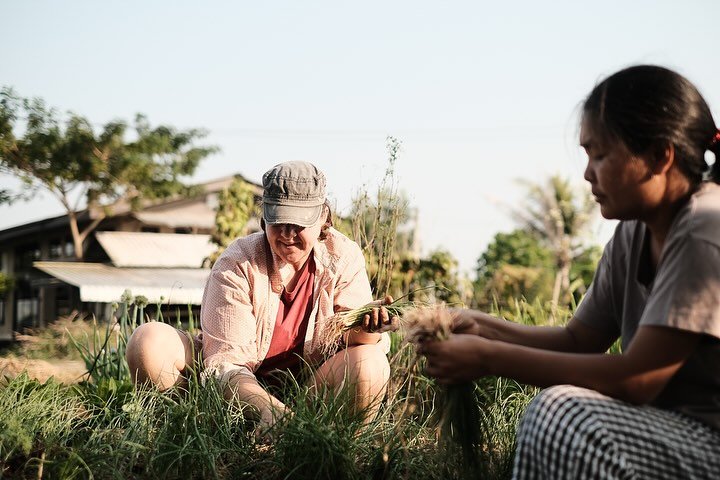
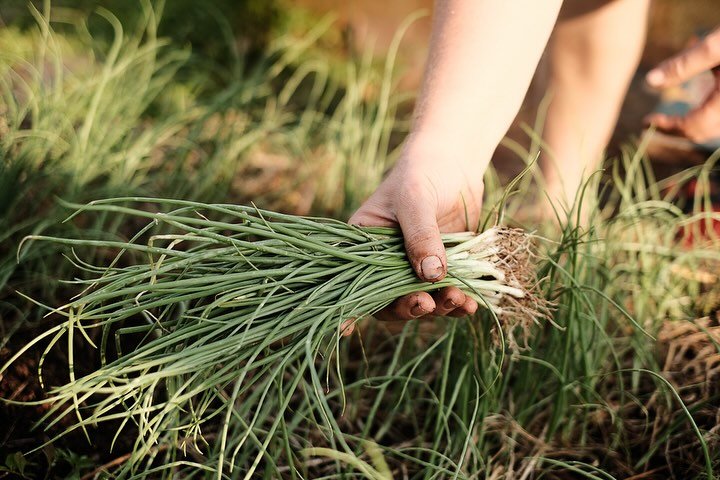
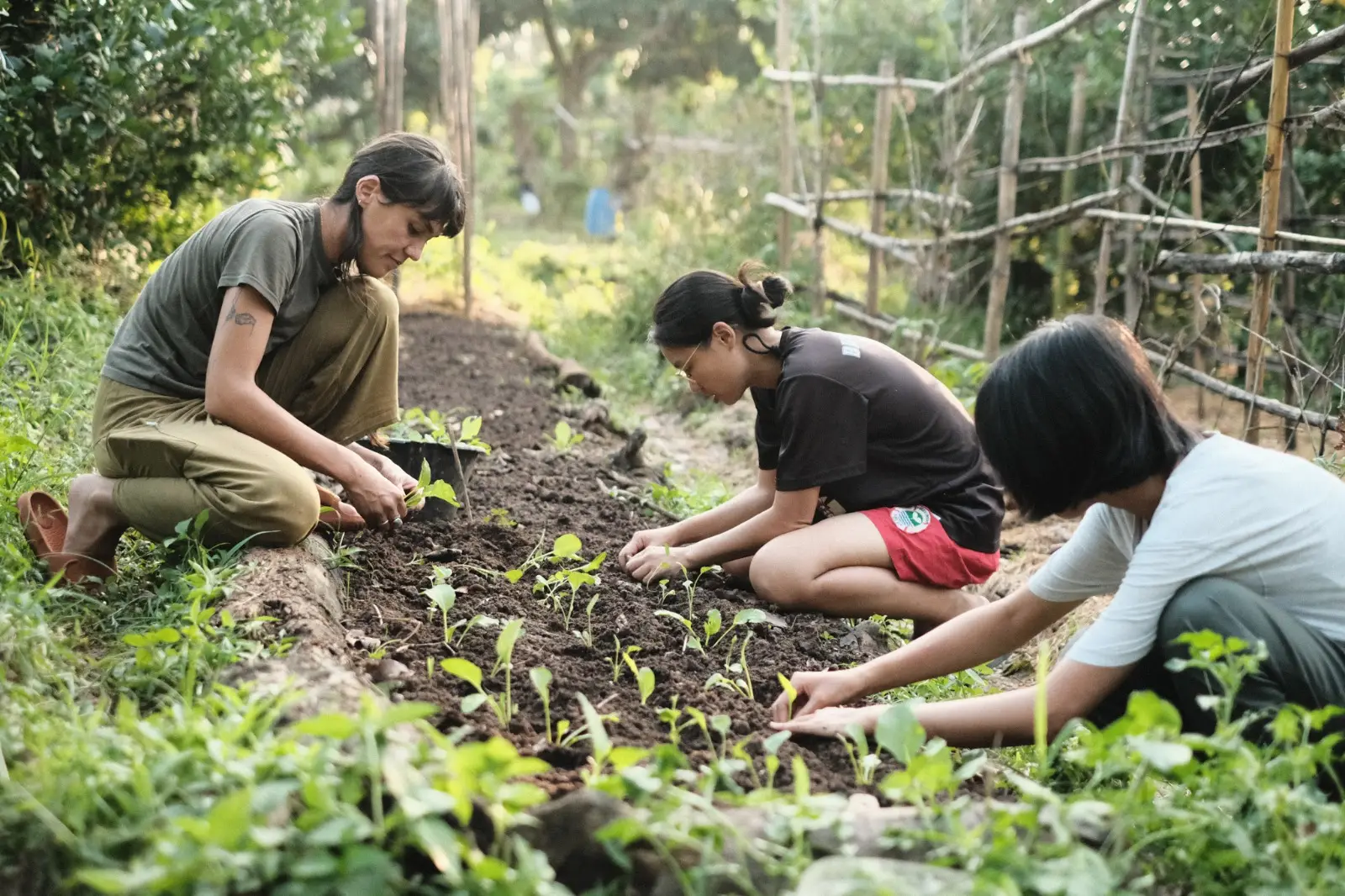
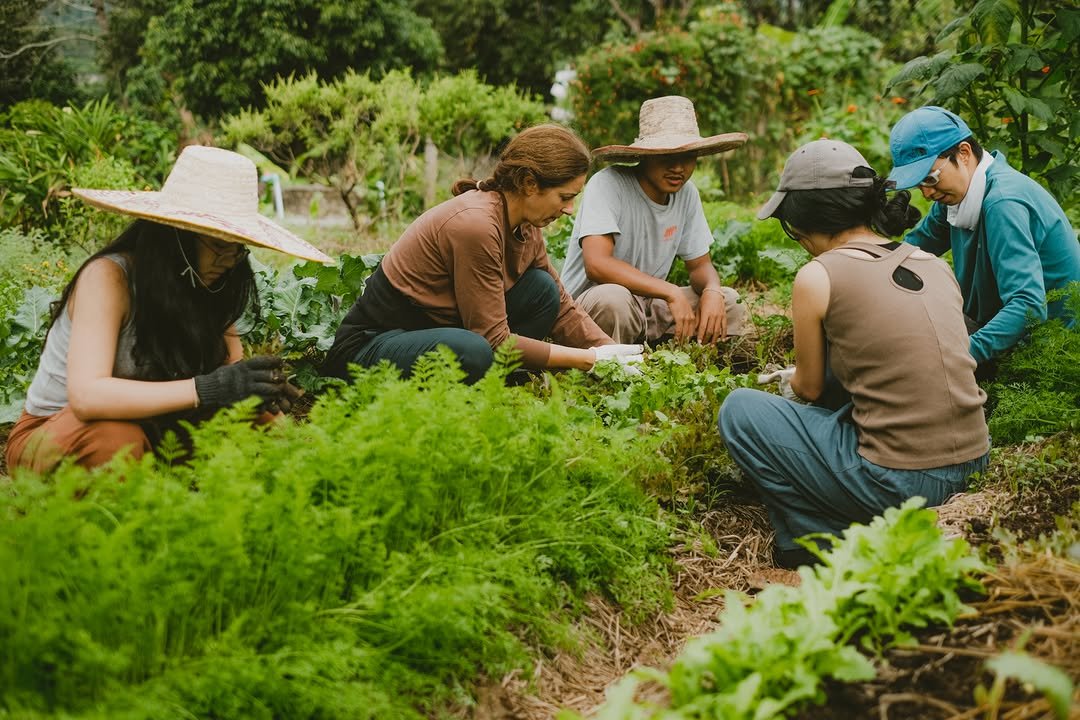
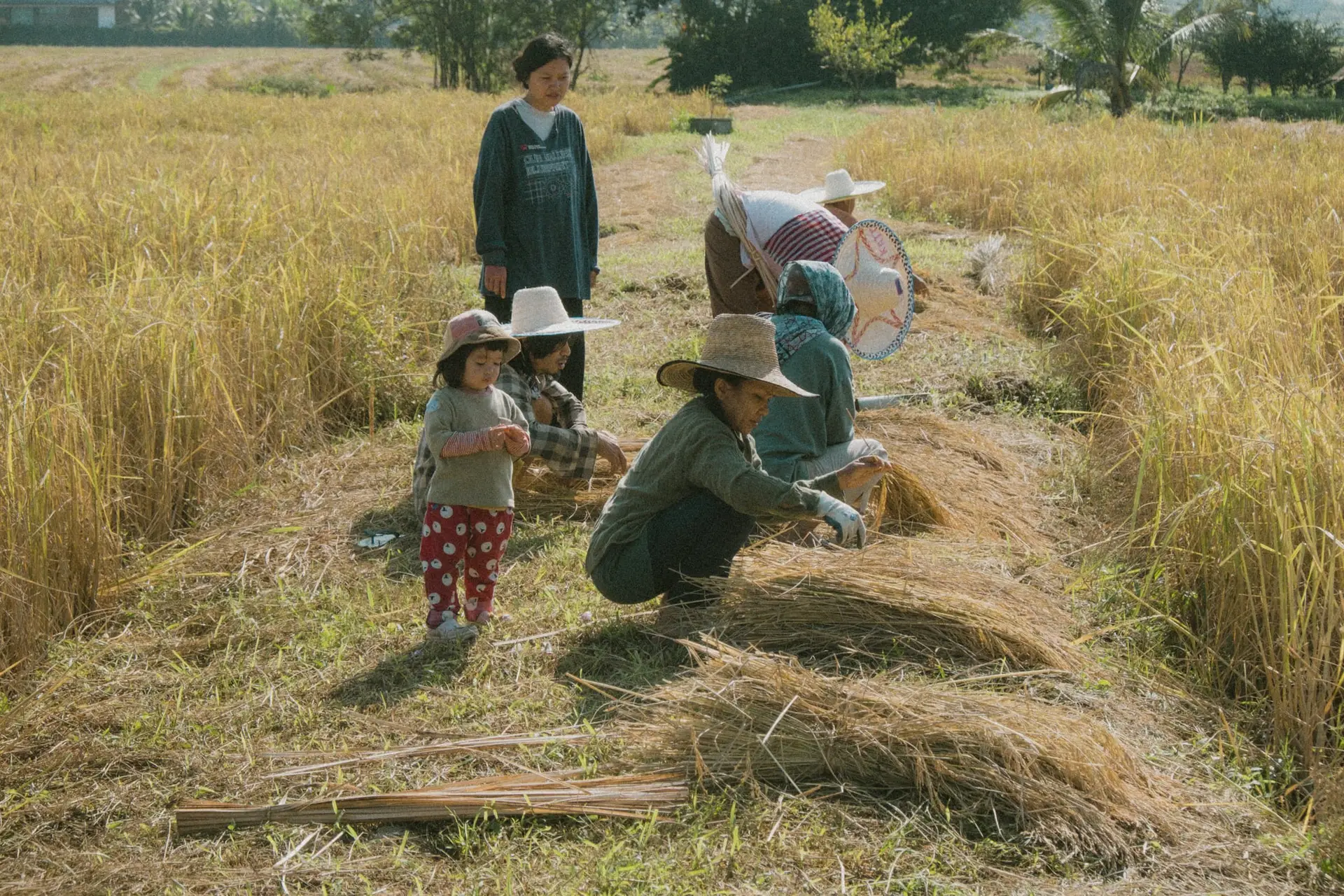
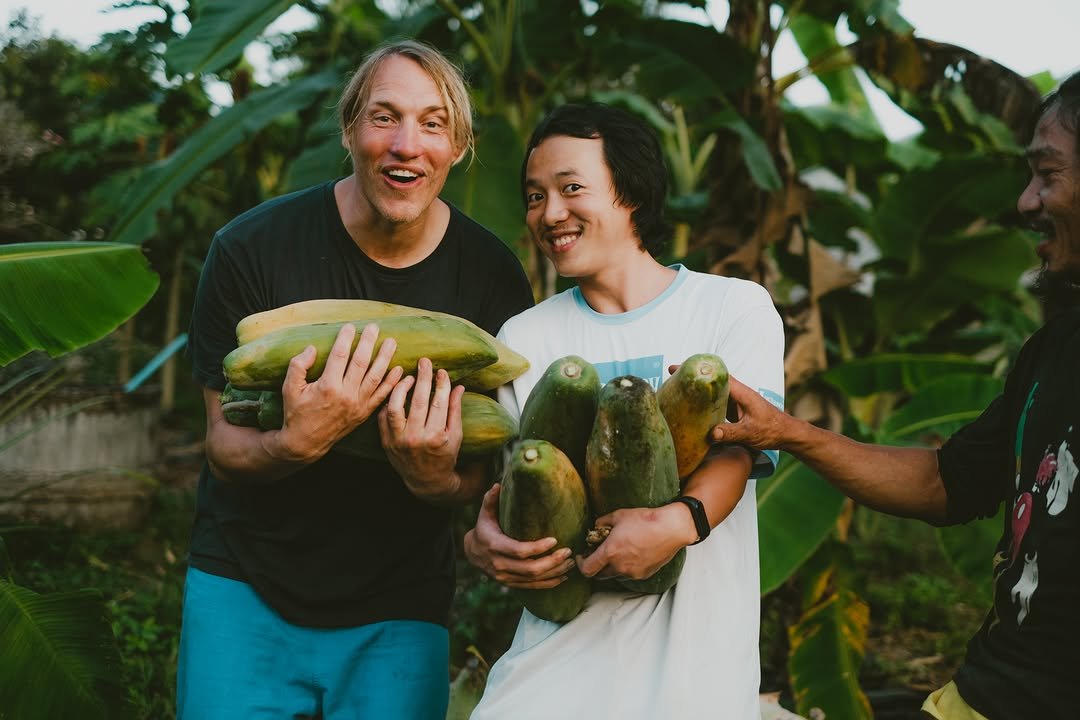
At Pun Pun we use regenerative agriculture practices to cultivate organic produce without the use of any chemical fertilizers, herbicides or pesticides. We plant integrated beds of a diverse range of varieties, reducing pests and optimizing intensified production. We propagate our own effective microorganisms for liquid fertilizers and make our own composts. We practice mostly hand cultivation and care and continue to learn through this process. We presently grow rice, vegetables, herbs, local perennial edibles, fruit trees, and have fish ponds and egg-laying chickens.
Our Products
- Pun Pun products are made from ingredients sourced on our own farm, or from farms within our organic friends network.
- We make homemade jams, pickled vegetables, dried herbs and teas, as well as our top selling kaffir lime shampoo, cold-processed bar soaps, and cloth sanitary pads.
- Our books cover topics such as earthen building, our philosophy on education, and a seed saving handbook.
- All of our products are available in the coffee shop at the farm. Seasonally we may have fresh produce available through our facebook site. And all our fabulous products can be purchased online using Shoppe within Thailand.
Who We Are
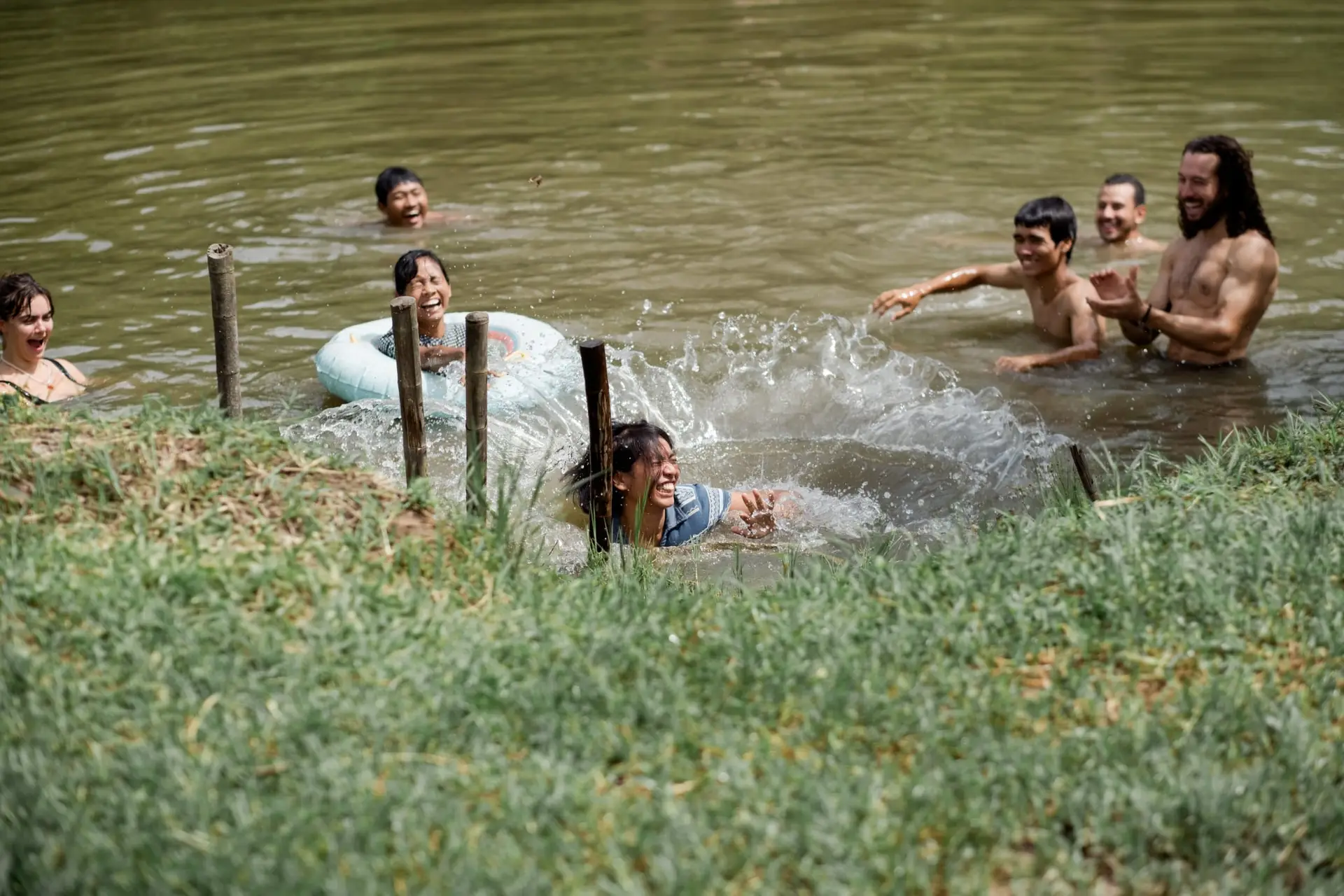
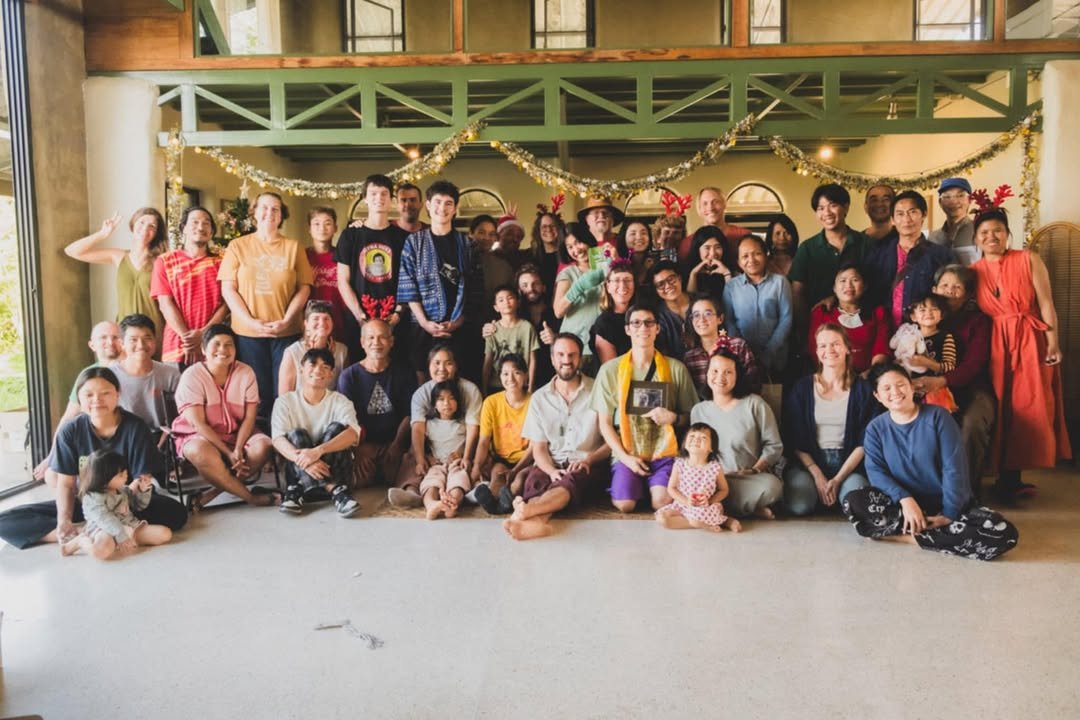
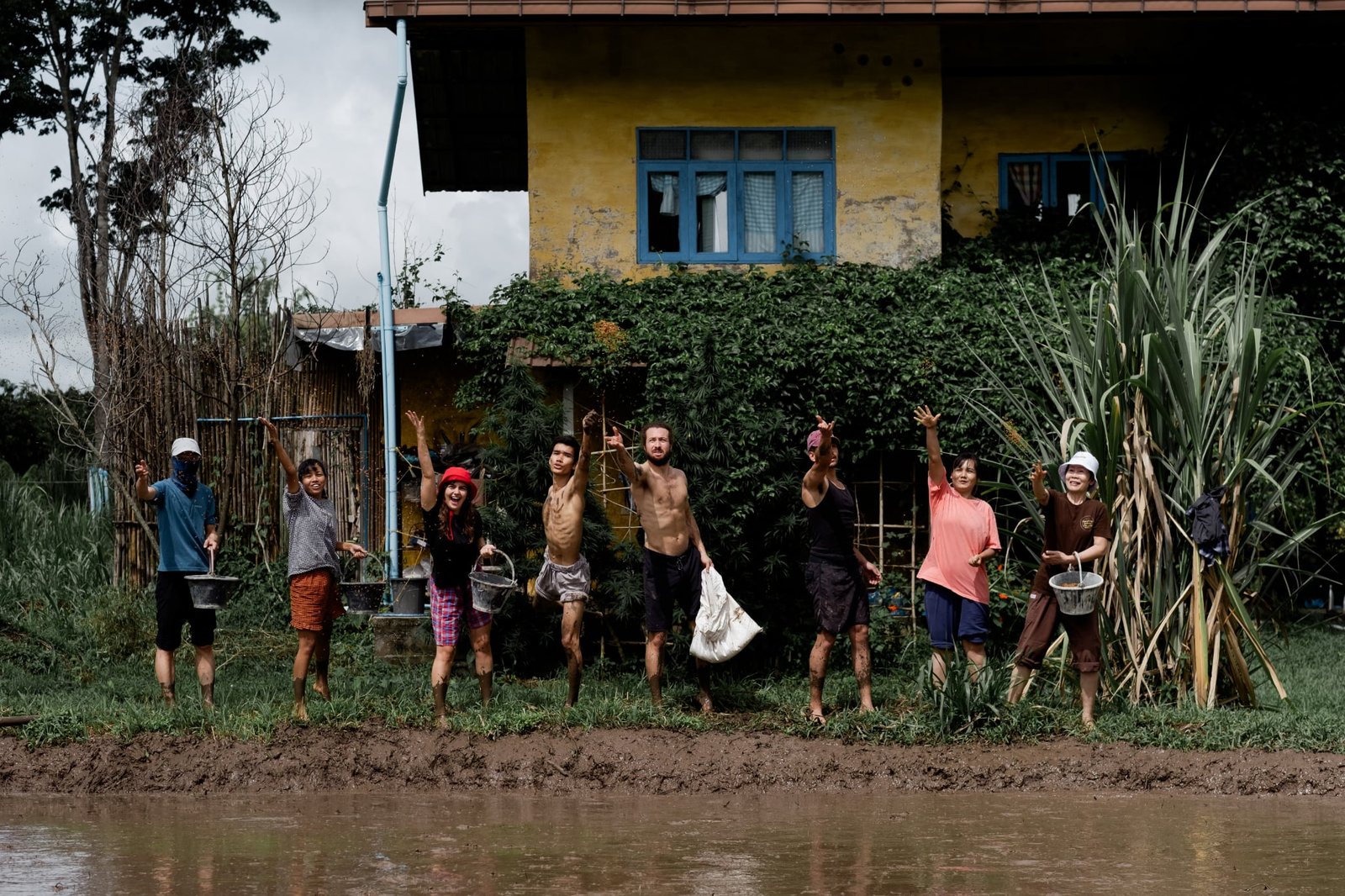
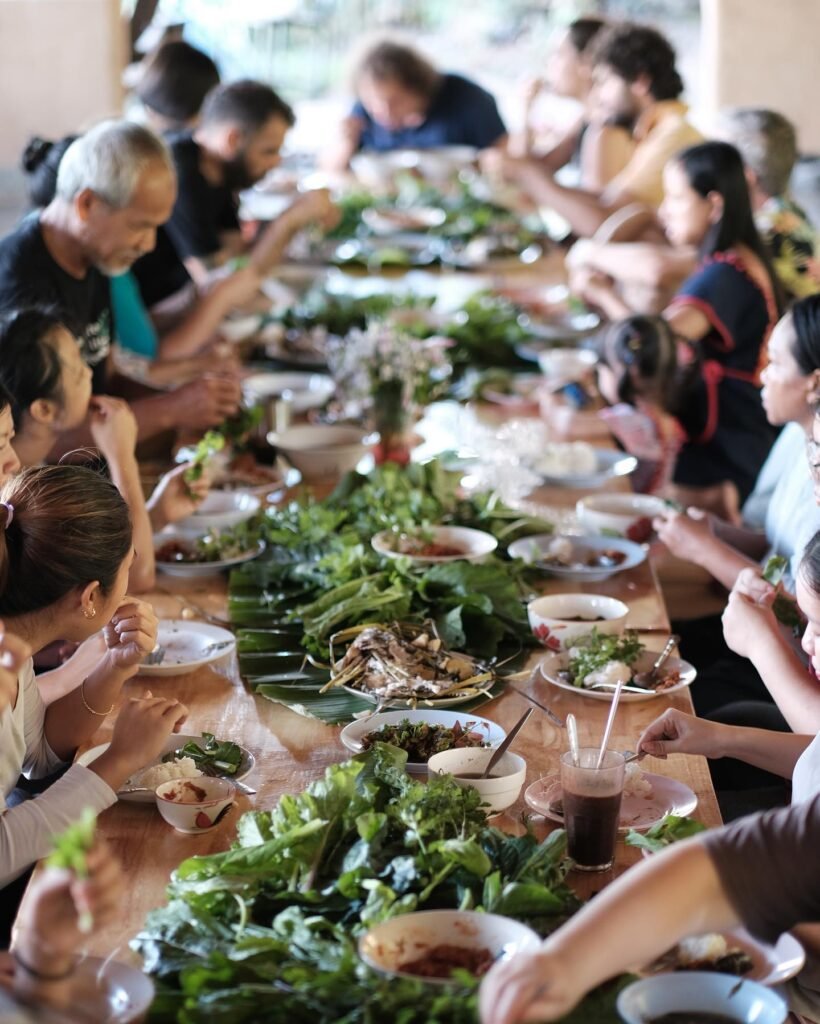
At Pun Pun we live in community. This means we share our daily lives, our meals, and our work together on the farm with each other. At present there are around 20 community members living and working at Pun Pun which enables us to try many new projects and support each other to continue learning, whether that’s through farming techniques, building, raising children, or community projects. We feel we can do so much more in community and think it’s helped us expand our ideas.
The creation of community at Pun Pun was one of evolution and although the idea was started by Peggy and Jo in the beginning, it very quickly transitioned into a space shared and constructed as a collective endeavor. This community has changed and evolved over the years but has remained a space dedicated to deconstructing hierarchies and seeking participation, commitment and involvement from all members.
At present we are a community of primarily Thai members, several families with different ages of children, single and partnered individuals. We make decisions together through meeting and discussing our shared goals under our overall mission. We each have individual roles to play within the community, but we value shared physical work, good meals, and sharing all of life’s moments together.
Over the 20 plus years we have been living together, community members have come and gone and we’ve been so lucky to have all of the contributions these different members have made. Many members have been here for over a decade and have been able to learn from the diverse range of people who have come to learn and stay at the farm over the years. Every community member has something unique to give and add to the learning experience of being together as we all come from different backgrounds within Thailand and outside, and learn together through this living and sharing of our lives and work.